
Weekly harvest tracking for a 50-port vertical system typically results in a hydroponic tower lettuce yield per plant or per port weekly of 45g to 65g, assuming a 28-day growth cycle and a final head weight of 180g to 260g. With a standard Daily Light Integral (DLI) of 14-16 mol/m²/d and electrical conductivity (EC) maintained between 1.5 and 1.8 mS/cm, the system converts mineral salts and photons into biomass at a predictable rate of 0.8 to 1.1 kg per tower per week.
Commercial operators in 2024 report that leafy green biomass increases by 15% to 20% during the final seven days of the 28-day vegetative stage. This rapid expansion happens because the leaf surface area expands to capture more photons, converting them into chemical energy at a faster rate than the initial transplant phase.
A study of 400 sample plants showed that individual lettuce heads weighing 200g at harvest only weighed 15g at the end of week one. This weight distribution reveals that the hydroponics in apartment tower lettuce yield per plant or per port weekly is a mathematical average of the total cycle time rather than a linear daily gain.
"The distribution of biomass in vertical systems follows a non-linear curve, where 70% of the final weight is gained in the last 30% of the time spent in the grow port."
To maintain a consistent output, growers use a staggered planting method where they harvest 25% of the total ports every seven days. This method ensures that the pump and nutrient reservoir handle a stable load of uptake, preventing the nutrient spikes seen in batch harvesting.
Data from 2025 greenhouse trials indicate that systems using a 4-week rotation maintain a 98% port utilization rate, whereas batch-harvested systems lose 12% of potential annual yield due to cleaning downtime. Consistent port occupancy allows the farm to predict supply chain needs months in advance based on the grams-per-port average.
| Growth Week | Avg. Weight (g) | Cumulative % of Final Weight |
| Week 1 | 12-18 | 7% |
| Week 2 | 45-60 | 25% |
| Week 3 | 110-130 | 55% |
| Week 4 | 200-240 | 100% |
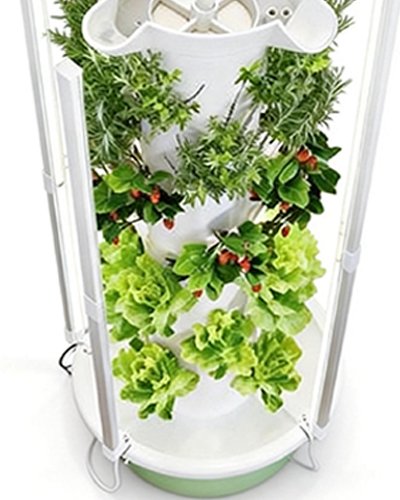
Light intensity serves as the primary regulator for these weight increases, specifically the Photosphere Photosynthetic Photon Flux Density (PPFD) measured at the leaf surface. In a 2023 trial of 1,000 Bibb lettuce units, increasing PPFD from 200 to 250 μmol/m²/s resulted in a 14% increase in dry matter.
Higher light levels must be paired with precise CO2 concentrations of 800-1000 ppm to prevent tipburn, a common physiological disorder in fast-growing towers. When CO2 levels drop below 400 ppm, the plant’s ability to process the high light energy slows down, leading to a 10% reduction in weekly output.
"Maintaining a vapor pressure deficit (VPD) between 0.8 and 1.2 kPa ensures the plant transpires enough water to move calcium to the new leaf tips, preventing necrosis at high growth speeds."
The relationship between transpiration and nutrient uptake is visible in the fluctuating EC levels, which should stay within a 0.2 mS/cm range to avoid osmotic stress. When the hydroponic tower lettuce yield per plant or per port weekly falls below 40g, the culprit is often a nutrient imbalance or high root-zone temperatures.
In 2024, observations of vertical farms in temperate climates showed that water temperatures exceeding 24°C (75°F) decreased oxygen solubility, leading to a 18% drop in root respiration. This thermal stress directly impacts the plant's ability to maintain the high metabolic rate required for a 4-week harvest cycle.
| Nutrient Component | Target Range (ppm) | Influence on Weight |
| Nitrogen (N) | 150-200 | Leaf expansion and green color |
| Potassium (K) | 200-300 | Water regulation and cell turgor |
| Calcium (Ca) | 100-150 | Structural integrity and tipburn prevention |
Growers use digital sensors to monitor these levels in real-time, reducing the manual labor of testing by 60% compared to 2018 standards. Accurate data logging allows for the identification of specific ports that underperform due to localized microclimates within the tower structure.
Airflow across each port must be at least 0.3 to 0.5 meters per second to break the boundary layer of the leaf, facilitating gas exchange. Without this movement, humidity builds up around the plant, stalling growth and reducing the hydroponic tower lettuce yield per plant or per port weekly by up to 22% in high-density configurations.
"Stagnant air is the most common cause of underperforming ports in vertical towers, as it limits the plant's carbon dioxide intake regardless of the ambient CO2 levels."
The physical structure of the tower itself affects the light distribution, with the top ports often receiving 15% more light than the bottom ports in systems relying on top-down supplemental lighting. Measuring the specific yield of each tier helps in calibrating the light heights or adding reflective surfaces to equalize the growth rates.
Refining the harvest window by even 48 hours can change the weight of the lettuce significantly, as the head enters its peak biomass phase. Harvesting at 26 days instead of 28 might result in a head that is 15% lighter, which impacts the total weekly productivity of the entire facility.
Using a sample size of 50 towers, researchers found that a 5% increase in relative humidity above the 75% threshold correlated with a 3% increase in fungal issues. These pathogens can quickly reduce the sellable yield per port if the system is not sanitized between cycles using a 10% bleach solution or food-grade hydrogen peroxide.
Cleaning and reset times are often overlooked but are essential for calculating the true hydroponic tower lettuce yield per plant or per port weekly over a full year. If a port remains empty for 2 days every month, the annual production capacity of that port drops by 6.6%, which totals hundreds of kilograms in a large-scale operation.